
A Special Investigation Team (SIT) formed by the Uttar Pradesh government has questioned Shri Ram Janmabhoomi Teerth Kshetra Trust general secretary Champat Rai and administrator Gopal Rao regarding allegations of donation money theft and financial mismanagement at the Ram temple in Ayodhya.

Households should moderate large discretionary expenses for the time being.
'They should prioritise essential spending. They should maintain an emergency fund covering 6 to 12 months of expenses.'

Many high-profile IPOs in India since 2021 have destroyed investor wealth due to overvaluation, weak business models, and post-listing disinterest, turning 1 lakh investments into as little as 3,500.

We journey to 10 famous Maa temples, each devoted to a different form of Devi or the female force...

Their assets under management (AUM) rose from Rs 1.04 trillion (January 31, 2025) to Rs 1.75 trillion (January 31, 2026), an increase of 68.3 per cent.

'...a mix of asset classes.' 'Include equities for growth (across market caps), debt for stability and liquidity, gold as a hedge against macro and currency risk, and global assets for geographical and economic diversification.'

Investors encountering underperformance must be patient.

'Having a separate healthcare corpus is extremely important even for those already covered by health insurance.'

'Allocating 5 to 10 per cent of one's portfolio and staying disciplined through market cycles helps in having a positive investment experience.'

New investors should avoid short-term, tactical entries and instead go for staggered buying via ETFs to manage volatility.

The froth in the small and midcap (SMID) space is limited to a few pockets, but regulatory scrutiny could lead to sustained volatility, observe India's top-drawer wealth managers. They add that they have been advising clients to reduce their exposure to smallcaps. Anand Rathi Wealth, which manages investor wealth through mutual funds (MFs), reports that its exposure to smallcap stocks, both through MFs and directly, has decreased by nearly 7 percentage points in the past few months, now standing at 23 per cent.

A higher TER means a larger portion of the return goes to the AMC, leaving less for the investor, unless compensated by higher returns.

'If the markets correct further, PSU stocks could continue to decline.'

Total market funds are ideal for long-term investors who prefer a simple, hands-off approach, making them suitable for those unwilling to manage multiple funds.

The ideal time to invest in sector funds, is during a downturn so that investors can capitalise on a turnaround in 1.5 to 2 years.

'Arbitrage funds make the most sense for those in the 30 per cent tax bracket, are viable for those in the 20 per cent bracket, but less so for those in the 10 per cent bracket.'

Experts say a lot of new wealth is being generated by promoters selling their stake.

Long-term investors should never stop their SIPs during market corrections.

'Listen to the voice in your head and keep your inner sanctum safe.'

The rising market poses a dilemma for investors on whether to continue buying, reduce equity holding, or exit equities altogether.

Top losers in the Sensex pack included SBI, HDFC twins, Bajaj Auto, ONGC and Tata Steel, falling up to 2.49 per cent.

Those who cannot bear significant downturns (as much as 40 per cent) or have a short horizon should exit entirely.

After three consecutive years of infusing huge funds, foreign portfolio investors retreated from the Indian equity markets in a big way in 2022 with the highest-ever yearly net outflow of nearly Rs 1.21 lakh crore. The huge outflow, which surpasses by a big margin the previous record of Rs 53,000 crore net withdrawal in 2008, came amid aggressive rate hikes by central banks globally but 2023 is expected to be better on positivity about overall macroeconomic trends in India, experts said. Apart from global monetary tightening, volatile crude, rising commodity prices along with Russia and Ukraine conflict led to an exodus of foreign money in 2022.

'No human bias is involved as happens in active funds.'

You also avoid capital gains tax during redemption in case the gold price is higher, making them tax efficient.

Top gainers in the Sensex pack included Bajaj Finance, ONGC, Yes Bank, HDFC, HCL Tech, Tech Mahindra, TCS, ICICI Bank and RIL, rising up to 3.57 per cent.
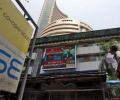
Hero MotoCorp was the top gainer in the Sensex pack, spurting 4.46 per cent. IndusInd Bank, Tata Motors, Vedanta, SBI, M&M, Sun Pharma, Tata Steel, HDFC and HDFC Bank too rose up to 3.63 per cent.

Balanced advantage funds have the potential to earn superior risk-adjusted returns for the investor and offer a smoother investment journey.

The fall was led by banking stocks, with IndusInd Bank, Kotak Bank, Federal Bank, Axis Bank, ICICI Bank, HDFC Bank and SBI declining up to 2.36 per cent.

Sector-wise, banking, IT, pharma and realty indices drove the market momentum.

Yes Bank was the biggest gainer in the Sensex pack, rallying 11.48 per cent amid reports that private equity firms have showed interest in buying a major stake in the private sector lender.

Cautious optimism over US-China trade talks after US President Trump said his trade negotiators had received two "very good calls" from Beijing also influenced the local currency, dealers said.

The index widened its loss towards the fag-end on emergence of intense selling in heavyweights like ITC, RIL and ICICI Bank. In percentage terms, however, Sun Pharma was the biggest loser with 9.39 per cent drop. Intra-day, the pharma major's shares tanked over 20 per cent.

Fondly remembering the contribution of retiring members from the Rajya Sabha, Chairman Jagdeep Dhankhar on Thursday said the wisdom shared by them would be greatly missed and their departure would leave a void.

Top losers include ONGC, SBI, PowerGrid, L&T, Yes Bank, Asian Paints, Bajaj Finance, Maruti and NTPC, falling up to 2.84 per cent. On the other hand, gainers include Tata Motors, TCS, HDFC, HCL Tech, Infosys, ITC, HDFC Bank and HUL, rising up to 2.18 per cent.

Investing in start-ups can be highly rewarding, but direct investing is not meant for everyone. For the majority of wealthy investors, taking the private-equity route could still be the better option.

Improved credit profile may make you eligible to transfer your existing home loan to another lender at a much lower rate.

SBI was the biggest loser in the Sensex pack, shedding 2.40 per cent, followed by Yes Bank, Bharti Airtel, L&T, Sun Pharma, M&M, ICICI Bank, ONGC, RIL, Asian Paints, Vedanta and HUL, which lost up to 2.37 per cent.
While Vedanta was the biggest gainer in the Sensex pack rallying 4.67 per cent, others included Tata Steel, ONGC, NTPC, Yes Bank, Infosys, Sun Pharma, Bharti Airtel, SBI, Bajaj Finance, L&T and RIL, rising up to 4.13 per cent.

Top gainers in the Sensex pack included Bharti Airtel, Tata Motors, IndusInd Bank, Kotak Bank, Hero MotoCorp, Asian Paints and PowerGrid, which rose up to 2.53 per cent.
